
Signal Hill Trail St. John’s Newfoundland: Hiking Guide, Cabot Tower & Marconi’s Wireless History
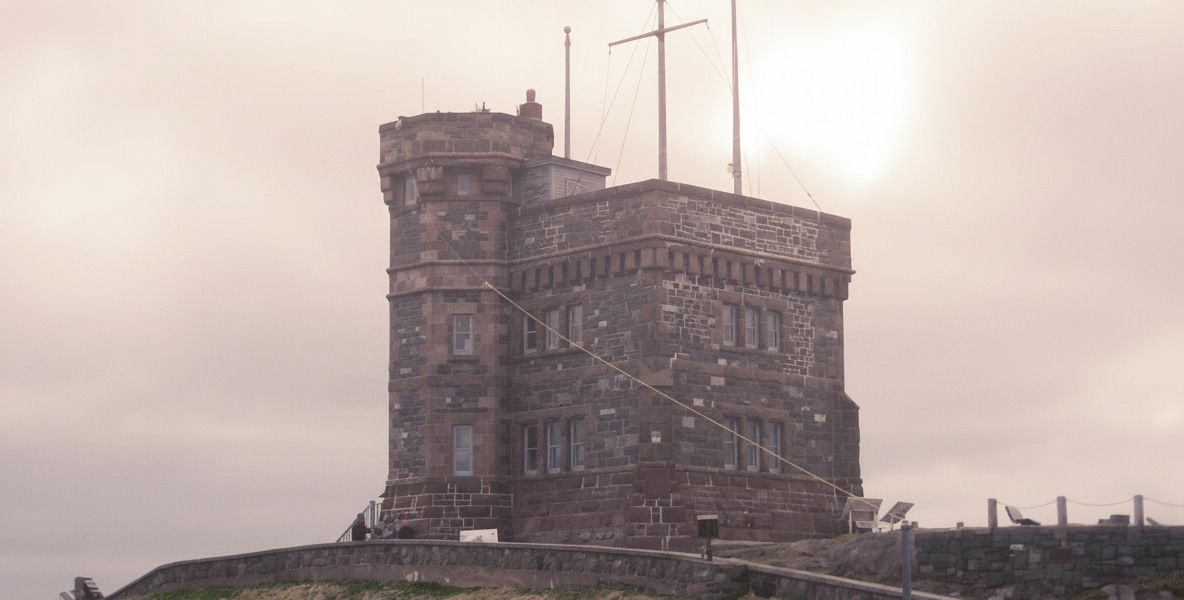
Signal Hill: Where History and Harbour Meet
Signal Hill National Historic Site rises above the entrance to St. John’s harbour — a narrow gap in the cliffs known as The Narrows. For centuries, this strategic hilltop has been a lookout, a battleground, and a place where world-changing technology was tested. Today, it is one of Newfoundland’s most visited landmarks, offering dramatic Atlantic views and layers of history spanning over 500 years.
Key Facts
| Detail | Information |
|---|---|
| Designation | Signal Hill National Historic Site |
| Location | Overlooks St. John’s harbour entrance (The Narrows) |
| Cabot Tower | Built 1897 |
| Marconi’s Signal | December 12, 1901 |
| Battle of Signal Hill | September 15, 1762 |
| Admission | Parks Canada fee; free parking |
Cabot Tower
Cabot Tower, the stone landmark that crowns Signal Hill, was built in 1897 to commemorate two events: the 400th anniversary of John Cabot’s voyage to Newfoundland in 1497 and Queen Victoria’s Diamond Jubilee. The squat, fortress-like tower was constructed from local stone and has become the defining image of St. John’s — visible from across the harbour and featured on countless postcards and guidebook covers.
Inside, exhibits cover the history of communications at Signal Hill, from flag signalling systems used to announce arriving ships to the revolutionary wireless experiments of the early 20th century.
Marconi’s Wireless Signal: A Moment That Changed the World
On December 12, 1901, Italian inventor Guglielmo Marconi stood at Signal Hill and received the first transatlantic wireless signal — three faint clicks representing the Morse code letter “S” — transmitted from Poldhu, Cornwall, over 3,400 km of open ocean. The achievement proved that radio waves could follow the Earth’s curvature, defying the scientific consensus of the time.
This single event changed global communications forever, laying the foundation for radio broadcasting, radar, television, and ultimately the wireless technology we rely on today. A plaque and exhibits at Cabot Tower mark the exact location of Marconi’s receiving station.
The Battle of Signal Hill (1762)
Signal Hill was the site of the final battle of the Seven Years’ War in North America. On September 15, 1762, British forces under Colonel William Amherst defeated the French garrison that had briefly captured St. John’s. The battle secured British control of Newfoundland and its vital cod fisheries. The French surrender here effectively ended European military conflict in North America — just months before the Treaty of Paris formally concluded the war.
Hiking Trails
Signal Hill offers excellent hiking with dramatic coastal scenery:
- North Head Trail — A 1.7 km loop along the cliff edge with stunning Atlantic views. The trail passes the remains of military fortifications and offers some of the most photographed vistas in Newfoundland. Moderately strenuous with exposed cliff sections.
- Ladies’ Lookout Trail — A shorter, easier walk to a viewpoint offering panoramic harbour views. From here, you can watch ships entering and leaving The Narrows far below.
- East Coast Trail connection — Signal Hill connects to the broader East Coast Trail network, allowing experienced hikers to continue south toward Cape Spear or north toward Quidi Vidi.
The Johnson GEO CENTRE
Located at the base of Signal Hill, the Johnson GEO CENTRE is a geological interpretation centre built into the hillside. Its exhibits explore Newfoundland’s ancient geological history — the island sits on some of the oldest rocks on Earth, over 500 million years old. Interactive displays cover plate tectonics, the Titanic (which sank just off the Newfoundland coast), and the oil and gas industry on the Grand Banks.
Signal Hill Tattoo
During summer months, the Signal Hill Tattoo brings history to life with military re-enactment performances at Cabot Tower. The Royal Newfoundland Regiment of Foot performs drills, musket volleys, and cannon firings in period uniforms, recreating the military traditions of the 18th and 19th centuries. Performances typically run from July through mid-August, several times per week — check Parks Canada schedules for exact dates.
Visiting Signal Hill
Signal Hill is located within the city limits of St. John’s, just minutes from downtown. Free parking is available at multiple lots along the road to the summit. A Parks Canada admission fee applies for entry to Cabot Tower and its exhibits. The site is open year-round, though winter access may be limited by weather and road conditions. For the best experience, visit on a clear day when visibility extends far out to sea — though the sight of fog rolling through The Narrows is equally memorable.