
Port Mann Bridge: World’s Widest Bridge (10 Lanes) — Surrey to Coquitlam Facts & Traffic Data
British ColumbiaConnecting Coquitlam to Surrey
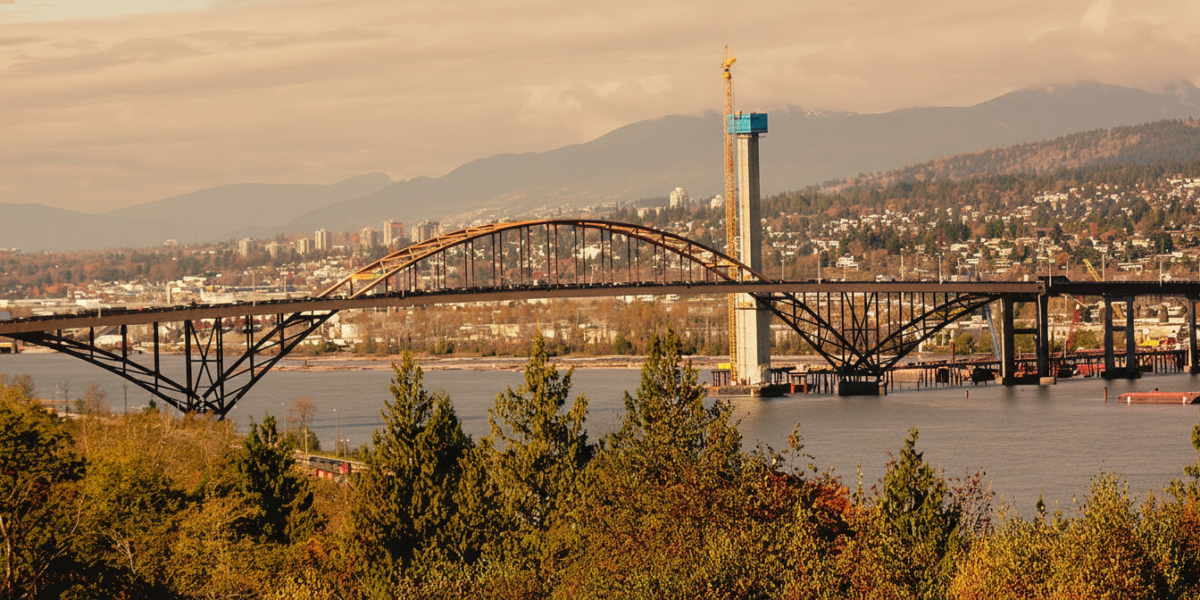
Port Mann Bridge: The World’s Widest Bridge
The Port Mann Bridge holds the title of world’s widest bridge at 10 lanes. This massive cable-stayed structure carries the Trans-Canada Highway (Highway 1) across the Fraser River between Surrey and Coquitlam in Metro Vancouver. Opened in 2012, it replaced the aging 1964 Port Mann Bridge and was designed to address some of the worst traffic congestion in western Canada.
Bridge Facts
| Stat | Details |
|---|---|
| Type | Cable-stayed |
| Total Length | 2,020 m (6,627 ft) |
| Width | 10 lanes — widest bridge in the world |
| Opened | 2012 |
| Construction Cost | $3.3 billion |
| Daily Traffic | 127,000+ vehicles |
Why 10 Lanes?
The original 1964 Port Mann Bridge was a 4-lane structure that had become one of the worst traffic bottlenecks in Canada. By the 2000s, congestion routinely backed up for kilometres in both directions during rush hour. The replacement was designed with 5 lanes in each direction plus dedicated HOV lanes and future transit capacity. At 127,000 vehicles per day, it is one of the busiest river crossings in Canada.
The Toll Controversy
To help pay for the $3.3 billion construction cost, the bridge was tolled from opening day. Tolls ranged from $1.50 to $3.00 depending on the time of day and vehicle type. The tolling proved deeply unpopular with commuters and became a major political issue. In 2017, the BC provincial government removed all tolls on both the Port Mann and the Golden Ears bridges, absorbing the remaining debt into general provincial revenues.
The Falling Ice Incident
The Port Mann Bridge’s most notorious moment came in its first winter of operation (December 2012), when ice chunks formed on the cable stays and fell onto vehicles below. Dozens of cars were damaged by falling ice, shattering windshields and denting roofs. The incident prompted emergency bridge closures and led to the installation of cable collar de-icing systems — a problem engineers had not fully anticipated during design.
Engineering Scale
- 288 cable stays support the bridge deck from two massive towers
- The main span is 470 m — one of the longest cable-stayed spans in North America
- Designed for seismic resilience in an earthquake-prone region
- Includes a multi-use path for pedestrians and cyclists on the south side
The Port Mann Bridge is a testament to the scale of infrastructure required to keep a fast-growing metropolitan region of 2.6 million people connected across its major waterways.